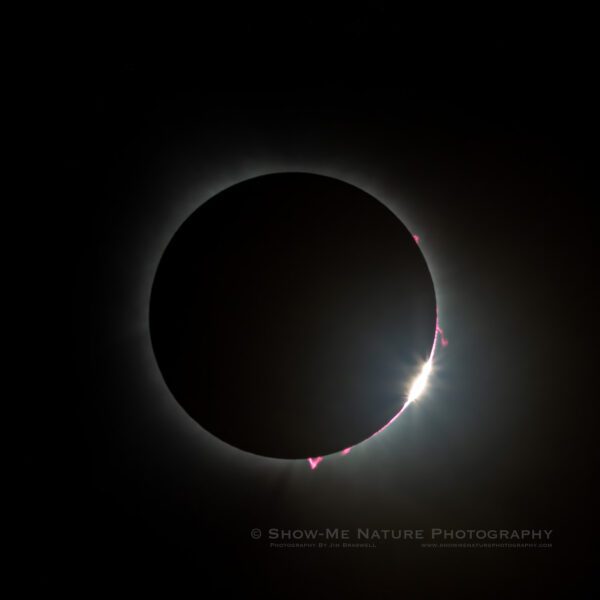
Today’s post features that sweet little nougat found in the center of fine chocolates … in this case, the main feature of the Total Solar Eclipse … the awe-inspiring view of the sun’s corona, normally seen only during complete totality!
The image below is a single image, captured using a very long exposure of the brilliant light of the sun’s corona as it peaks out from the moon-covered sun:
Using such a long exposure, I was also able to capture “EarthShine”, the part of the moon that is unlit by the sun but slightly glowing/visible because it catches some sunlight reflected by the earth, during totality.
When I photographed the eclipse, I took “tons” of images of totality, widely varying the exposure. This was done so that I could work on compositing individual images of the sun’s corona, including the inner corona (near the sun’s surface), the middle corona (just outside the inner corona), and the far-reaching outer corona, with it’s many “streamers”. I am currently working on compositing some of these images, so that more detail in the corona’s structure can be seen. If I am successful in this, I will show those images in a future post.
Photographic Equipment Used:
Canon 5D Mark 3 camera body
Canon 500mm, f/4 IS lens
Bogen 3021 tripod and Wemberly gimbal head
ISO 400
Aperture f/8
Shutter 1/8 sec.
Image processed in Adobe Lightroom Classic, and Adobe Photoshop 2024
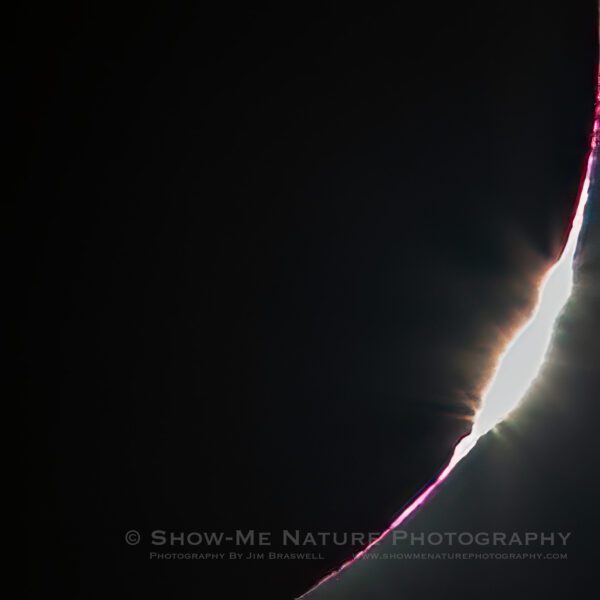
Today’s post features some of the solar phenomena that we cannot normally see, because of the extreme intensity of the sun’s brightness … the Solar Chromosphere and some Solar Prominences.
When in totality, we are able to see a couple of interesting features of the sun.
The sun’s Chromosphere is seen as a thin, red line that shows up around the edge of the moon-covered sun. The chromosphere is defined as the region of the sun’s atmosphere between the visible surface and it’s corona (the shell of thin gas that extends out some distance from the sun’s surface).
Solar Prominences are defined as large-scale, gaseous formations above the sun’s surface. These appear as “outstretched appendages” of the sun, and often appear to “loop around”.
In these images, you can see the Chromosphere and multiple Prominences, all captured during various stages of totality during the eclipse:
Coming up … in the next post, I will highlight what everyone goes to the total solar eclipse to see … the sun’s beautiful Corona.
Photographic Equipment Used:
Canon 5D Mark 3 camera body
Canon 500mm, f/4 IS lens, equipped with approved solar filter
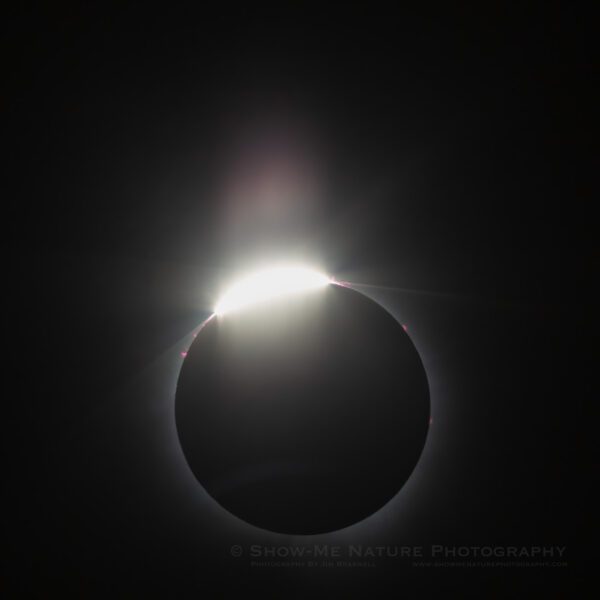
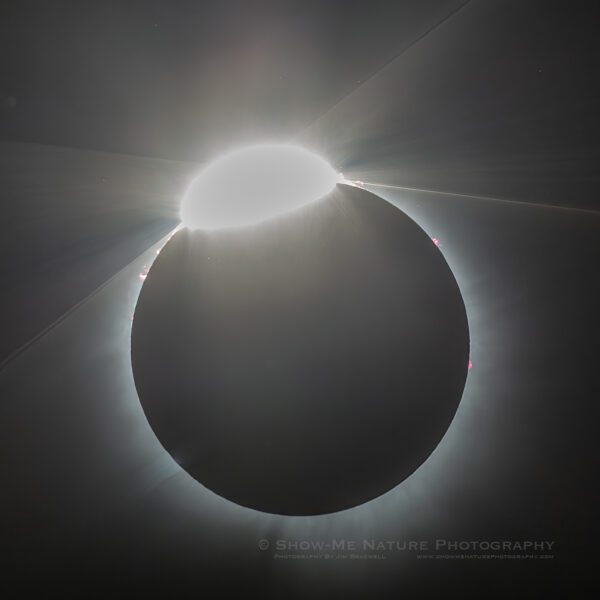
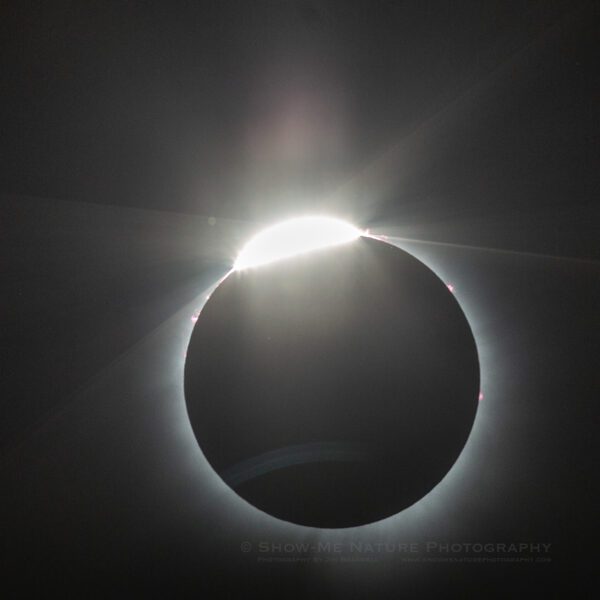
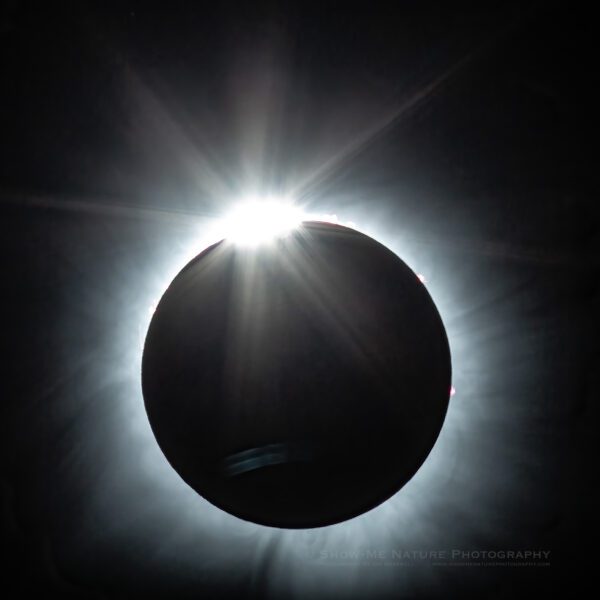
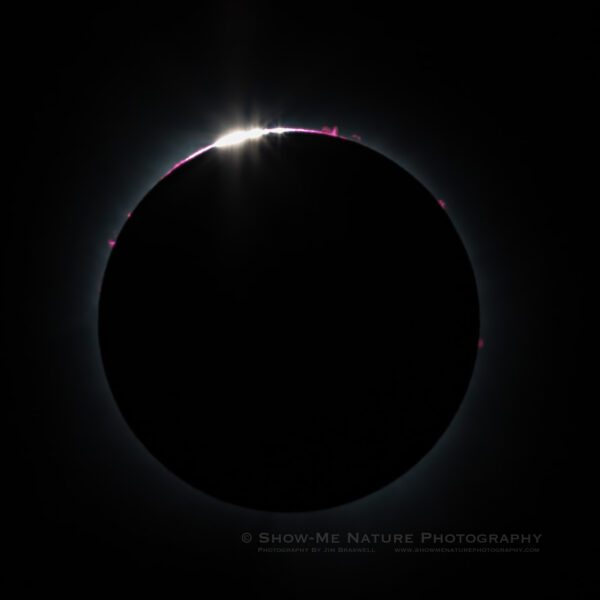
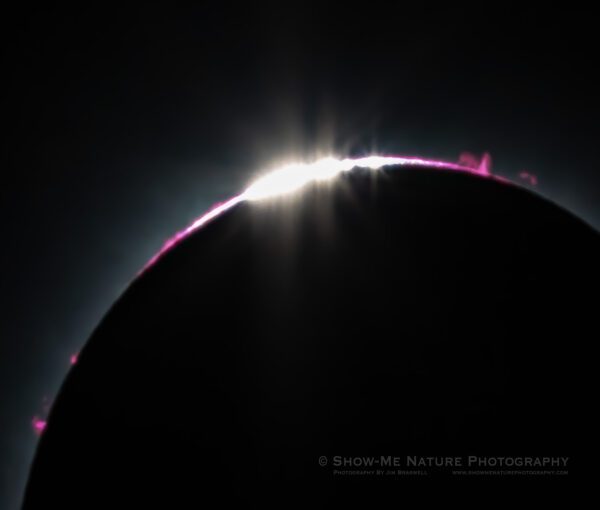
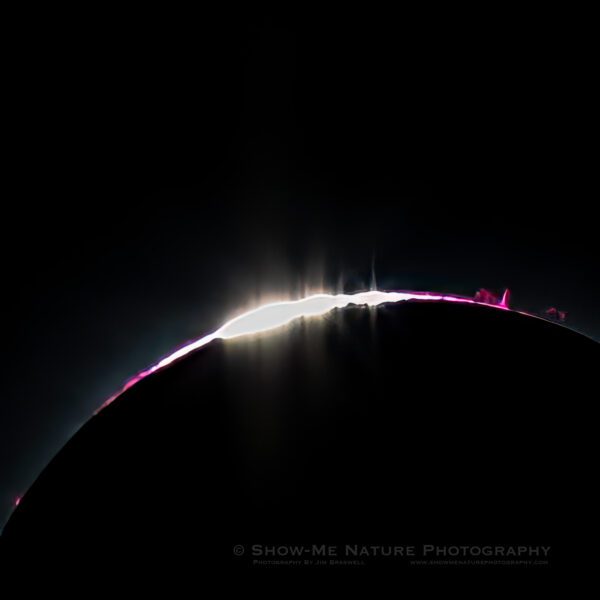
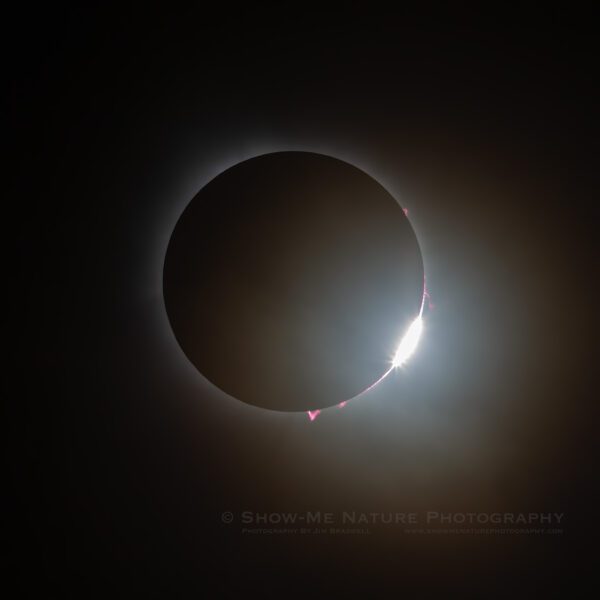
Today’s post features the early phenomena experienced during totality of the Great American Total Solar Eclipse of 2024 … the formation of the brilliant “Diamond Ring”, followed closely by the “breakdown” of the diamond ring into “Baily’s Beads”. I also have included some images of coming out of totality … the Baily’s Beads are once again seen (on the opposite side of the sun-moon surface), followed by the second Diamond Ring, as the sun begins emerging from darkness!
One of the most breathtaking features of a total solar eclipse is the “Diamond Ring effect”. This phenomenon occurs twice … just before, and just after totality. It is caused by the last tiny bit of sun peeking out from behind the sun, creating a bright point of light, resembling a sparkling Diamond, while the sun’s corona (the shell of thin gas that extends out some distance from the sun’s surface, normally visible only during totality) resembles the band of the diamond ring. This stage of the eclipse lasts only a few seconds, as the moon races to totally cover (or uncover) the sun!
The Diamond Ring immediately transitions into “Baily’s Beads”, going into totality (when coming out of totality, the Baily’s Beads happen first and the Diamond Ring immediately follows). Baily’s Beads occur whenever only a very small amount of light are visible at the edge of the moon. Named after scientist Francis Baily who first explained this phenomenon, the small amount of light appears as small beadlets of light … actually, they are seen as “beads” because the light passes through valleys on the moon’s surface, with each bead separated from the others by the moon’s mountainous landscape. Again, this phenomenon lasts only a few, brief seconds.
Here are some of the images I captured that show the Diamond Ring:
The Diamond Ring quickly transitions to Baily’s Beads:
After 4 minutes and 38 seconds of totality, the reverse stages are seen as the moon begins to uncover the sun (note that the Beads are not as well-defined on this side of the moon … likely due to less mountains/valleys on this portion of the moon surface):
Coming up … in the next post, I will highlight the sun’s chromosphere and solar prominences (some can be seen in the above images, but will be discussed in the next post).
Photographic Equipment Used:
Canon 5D Mark 3 camera body
Canon 500mm, f/4 IS lens, equipped with approved solar filter
Today’s post follows up on my recent, pre-eclipse post (“Out of this World”), if you missed it.
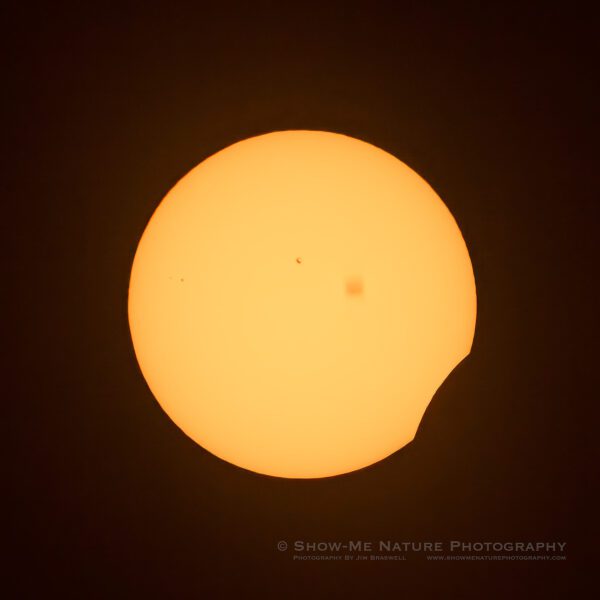
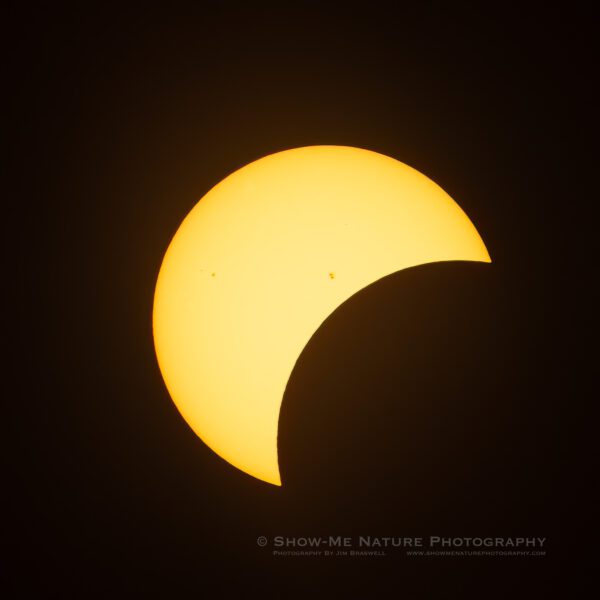
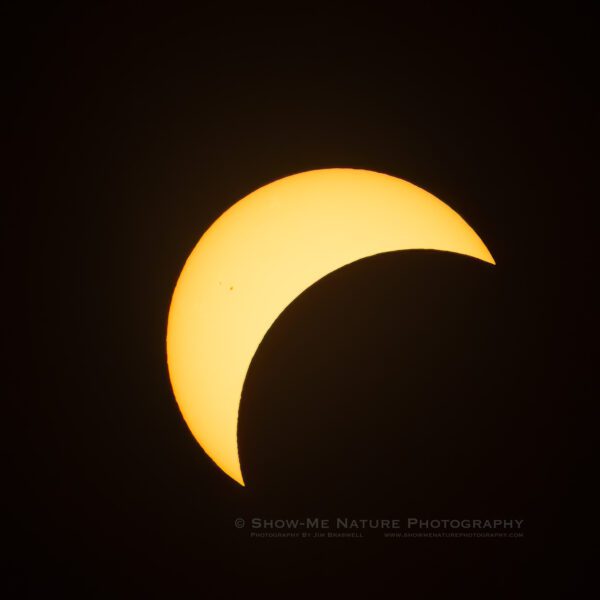
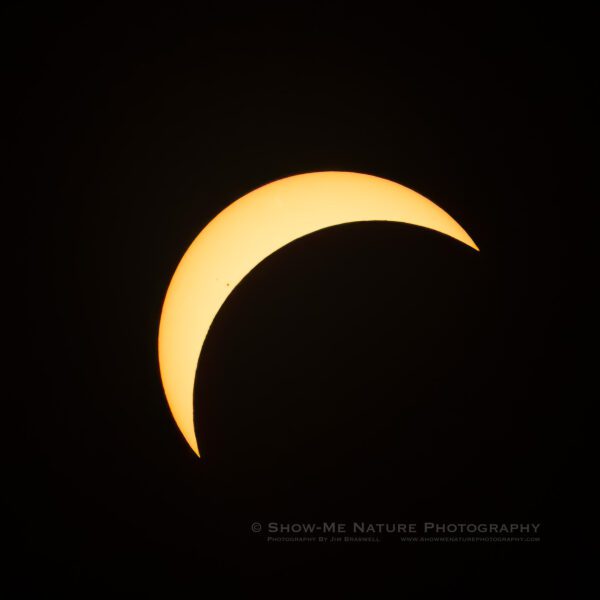
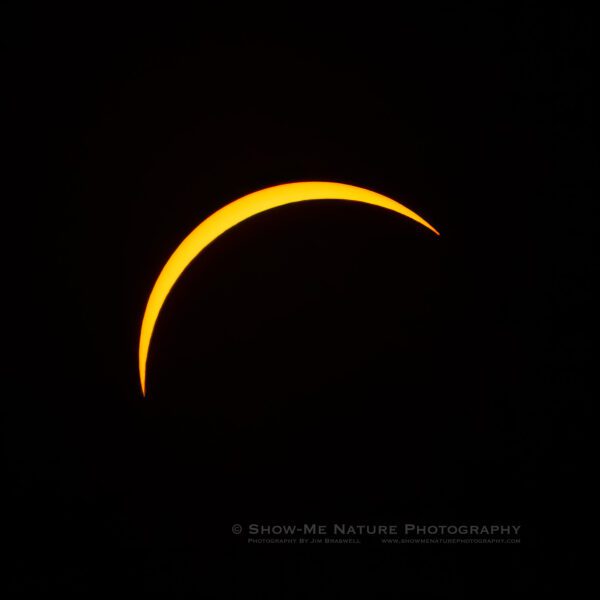
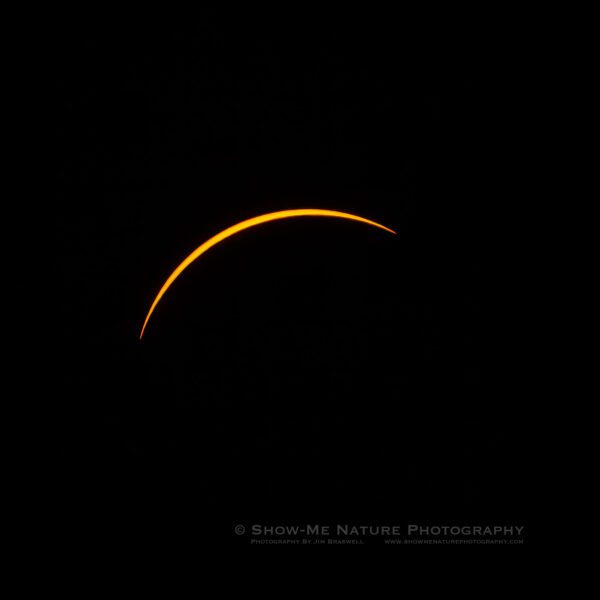
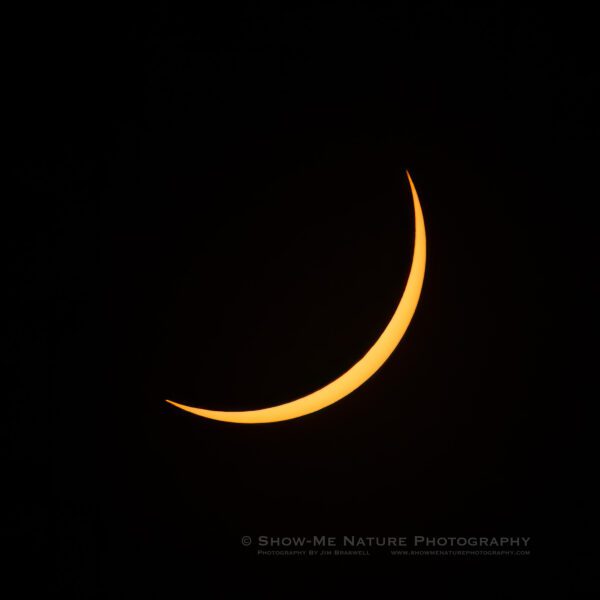
This post features images captured of the Partial Phases of the April 08, 2024, Total Solar Eclipse. The Totality images (featuring the wonderful “Bailey’s Beads”, “Diamond Rings”, Prominences, the Solar Corona, etc., will be featured individually over the next few posts). Enjoy!
The Sun Prior to Totality:
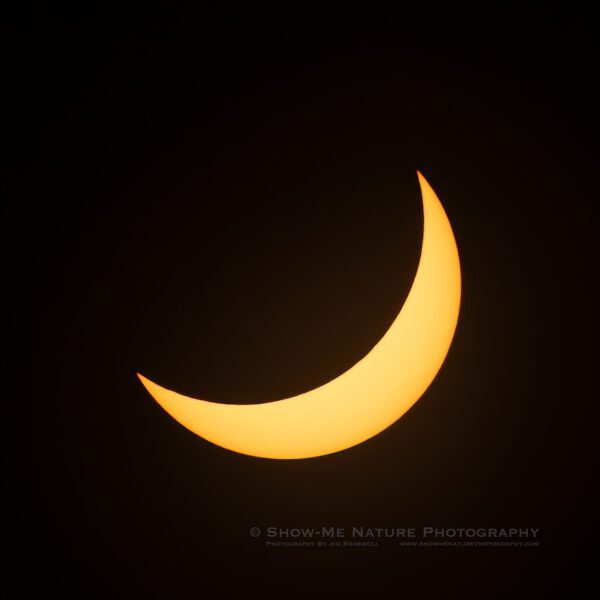
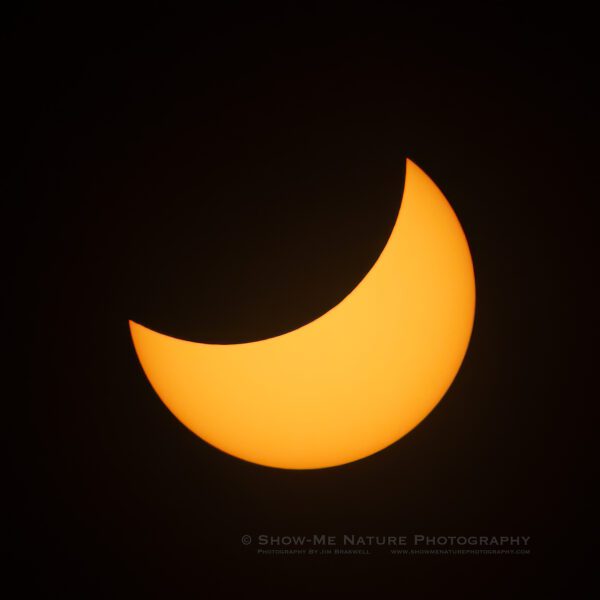
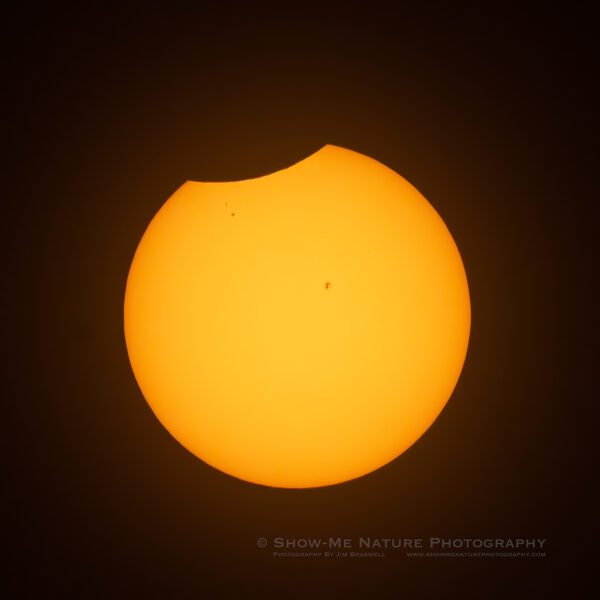
The Moon Takes It’s “First Bite” of the Sun:
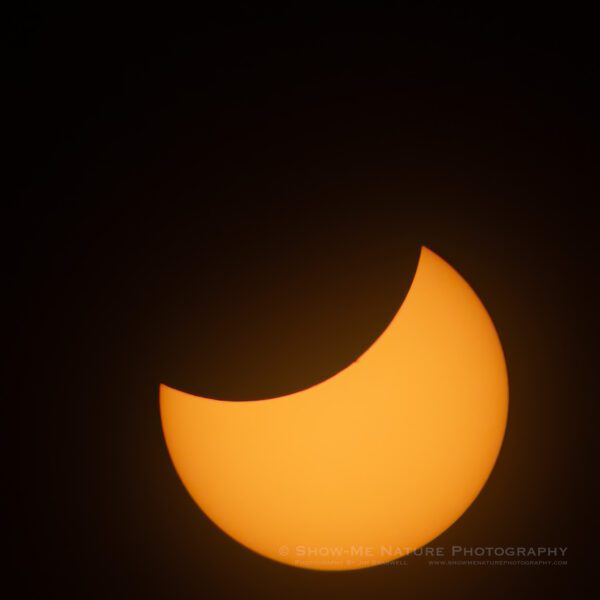
The Moon Continues to Cover the Sun:
Then, Totality!
Then, the eclipse continues with the moon moving away from the sun:
And, finally, we again see the sun as we typically see it:
Coming up … the marvelous “nougat” … that glorious, and rarely seen portion of the total eclipse!
Photographic Equipment Used:
Canon 5D Mark 3 camera body
Canon 500mm, f/4 IS lens, equipped with approved solar filter
Today’s post begins what will be a multiple-post series, from the “Great American Total Solar Eclipse of 2024” adventure I experienced on Monday, April 08.
I can honestly say that this was one of the most dramatic … uplifting … emotional … natural events I have ever experienced! I began preparing for this event well over a year ago. Knowing that this eclipse would likely be my last one to experience, I put a lot of time and effort into preparing for it (when the next total solar eclipse happens in the U.S., I will be 94!).
My initial plan was to travel to Texas to photograph this eclipse, followed up with some bluebonnet photography along some of Texas’ Bluebonnet trails. But recent, severe weather issues in Texas caused me to change locations … moving to the bootheel area of Missouri at the last minute; my decision to move was made on Friday, April 05.
Not having ever traveled to the bootheel area, I was starting at ground-level, spending many hours on the internet to determine where I should go. After much deliberation, I focused on the Riverfront Park in Van Buren, Missouri, as my preferred location … followed up with 3 other, backup locations nearby, in case my priority spot filled before I could get there.
Getting no sleep the night before eclipse (I was too excited to sleep!), I left my motel in Springfield, Missouri, at 4:00am. I was afraid the expected throngs of people would be elbowing each other for my spot at the park! But when I arrived at the park at 6:00am, there were only 2 RV’s, 1 pickup truck, and 1 car there! I found “My Spot” and settled back for a short nap … I got 15 minutes in, before other arriving spectators woke me.
The conditions were good … just a few, thin clouds around, but mostly sunny. Temperature forecast for a high of 80F. And gently winds. After getting my equipment set up, I spent a lot of time reviewing my game plan: “shoot this aspect of the eclipse by …..”. “Change my shutter speed to xxx, in preparation for yyy”. All the while, making notes and taping them to my tripods … I was determined I would get some elusive totality shots. And being an Eagle Scout taught me “to be prepared”!
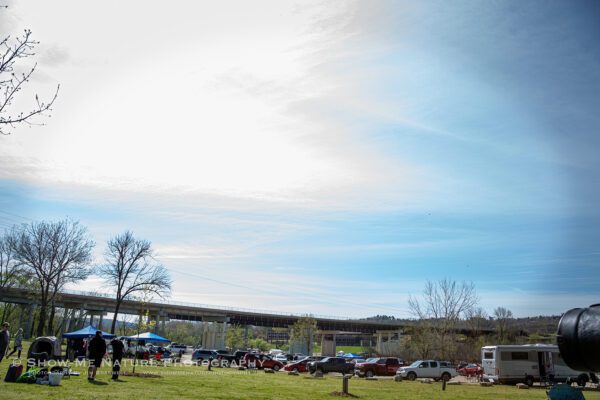
Just over an hour before the eclipse was to begin, I made sure everything was ready and captured a photo of the Riverfront Park where I set up (note the clouds were still hanging around at that time):
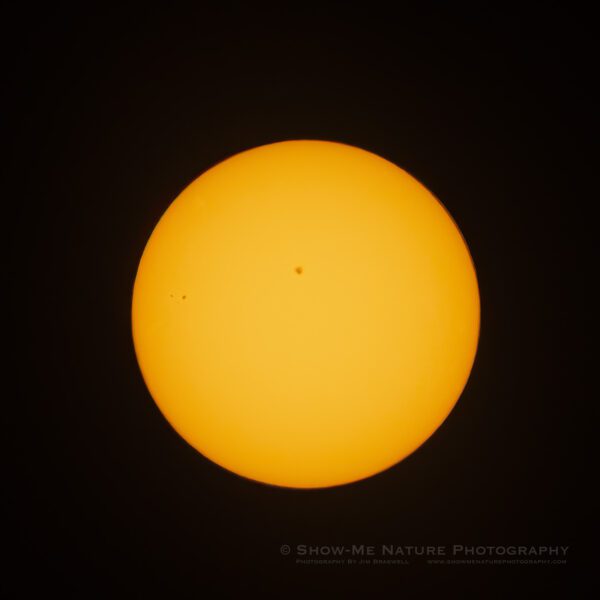
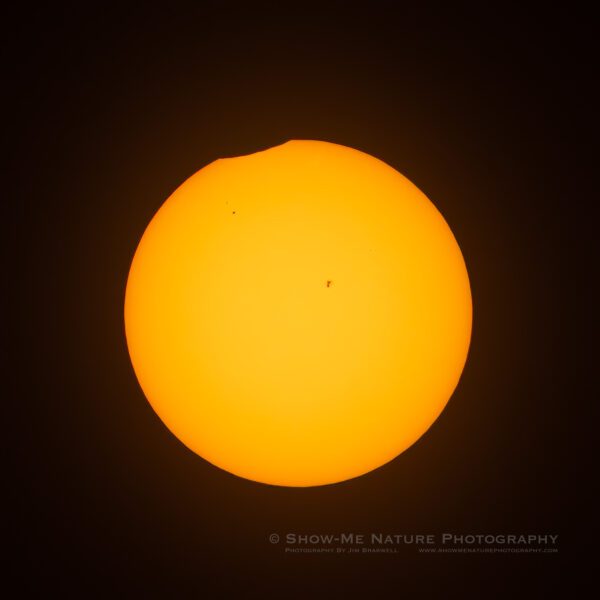
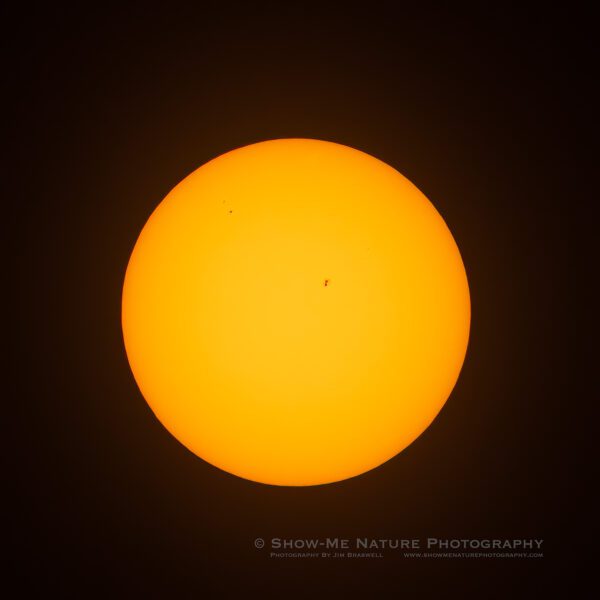
About 20 minutes prior to the moon taking it’s “first bite” out of the sun, I captured this image of the sun, with some visible sunspots (and the clouds were dissipating!):
I’m currently reviewing and editing the rest of the images I captured during the eclipse … all 388 of them! It will take me a while to get them edited, but hope to be able to post a few new images, next week. Stay tuned!
Photographic Equipment Used:
Canon 5D Mark 3 camera bodies (2 ea.)
Canon 500mm, f/4 IS lens, equipped with approved solar filter
Today, I’m featuring an image that was captured during a hike on a Missouri prairie, a number of years ago. While photographing in the early morning, I came across this brilliantly-colored, blue damselfly as it rested on a blade of prairie grass:
This image was captured pre-2004, when I was still shooting 35mm slides. I recently began converting some of those slides to digital files. It will take some time to convert my many slides, but I will be featuring some of my fond memories of early nature photography with you, as I get them converted.